PART FOUR
BUILD THIS LOVE
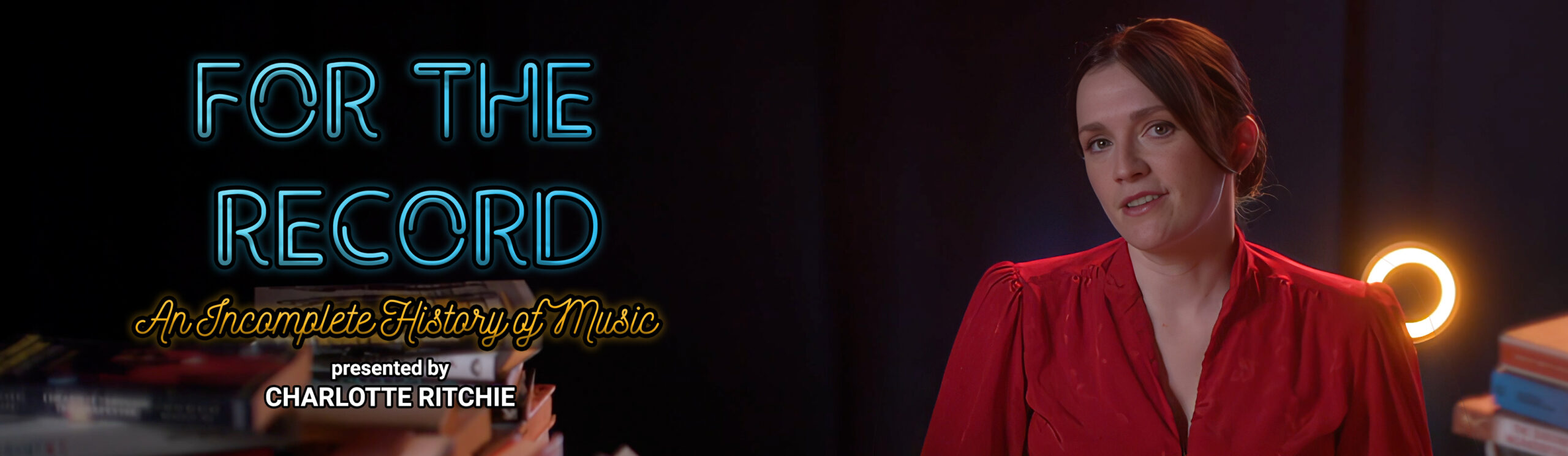
Using pianos and guitars as a case study we explore the evolution of musical instruments from ancient times to modern electronic devices. We then start to explore how we send music out in the world via the invention of sheet music and eventually recording and distribution systems like records and radios. Finally we make our own gramophone with a pin and a cone.
FIND OUT MORE ABOUT THE PEOPLE & INSTITUTIONS IN THIS EPISODE
Exclusive interviews in order of appearance in Part Four
 Steve Pretty
Musician
Website | Instagram
 Ruba Hillawi
Music educator and musician
Website | Instagram
 Professor Gabriele Rossi Rognoni
Professor of Musicology Royal College of Music
Website | Instagram
 Professor Marina Frolova-Walker
Music historian Cambridge
Website | Bluesky
 Martin Woolley
Musician & Museum Guide
Website
 Adrian Church
Director of Conservation, The Musical Museum
Website
 Professor Veit Heller
Curator, Grassi Museum
Website | Instagram
 Dr Elisabeth Giselbrecht
Researcher early written music
Website
 Richard Walley
Musician, Author, Artist & Activist
Instagram
 Jonathan Scott
Music Writer
Website
 Professor Mark Miodownik
Material Scientist, Author, Broadcaster
Website | Instagram | Bluesky
 Professor Helen Czerski
Physicist, oceanographer, broadcaster and author
Website | Instagram | Bluesky
 Ian Rankin
Author
Website | Bluesky
 Robin Ince
Comedian, Author, Broadcaster
Website | Instagram | Bluesky
 Beaty Rubens
Radio Producer, Author
Instagram
 Sophie Galpin
Musician, Singer/Songwriter AKA SOFT LAD
Website | Instagram
Some of the institutions releavant to this episode
 The Cosmic Shambles Network
Website | Instagram | Bluesky
 Kings Place Music Foundation
Website | Instagram
 The Royal Institution
Website | Instagram
 Taqasim Foundation
Website
 Royal College of Music
Website
 Grassi Voelkerkunde Museum
Website
 The Musical Museum
Website
 Watershed
Website
 The Laura Kinsella Foundation
FURTHER READING LIST
If you’d like to dig into any of the topics in this episode a little deeper, you can subscribe to our Patreon for upcoming extended interviews or pick up one of the books below. These are books by the interviewees featured in this episode, books we read in our research and recommended fascinating books of the topics covered.
- Royal College of Music Museum- Director’s Choice Buy It
- Early Music Printing in German-Speaking Lands edited by Elisabeth Giselbrecht Buy It
- Into the Groove: The Story of Sound From Tin Foil to Vinyl by Jonathan Scott Buy It
- Stuff Matters: Exploring the Marvelous Materials That Shape Our Man-Made World by Mark Miodownik Buy It
- Storm in a Teacup: The Physics of Everyday Life by Helen Czerski Buy It
- The Hanging Garden by Ian Rankin Buy It
- The Importance of Being Interested: Adventures in Scientific Curiosity by Robin Ince Buy It
- Listen In: How Radio Changed the Home by Beaty Rubens Buy It
- Seafaring: Canoeing Ancient Songlines by Victor Briggs Buy It
- The Songlines by Bruce Chatwin Buy It
- Songs Spirals: Sharing Womens Wisdom of Country Through Songlines by Gay’wu Group of Women Buy It
- Musical instruments : Their history from the Stone Age to the present day by Karl Geiringer Buy It
- Music in Primitive Culture by Bruno Nettl Buy It
- Musical Instruments : From The Renaissance To The 19th Century by Sergio Paganelli Buy It
- The Sound of Being Human: How Music Shapes Our Lives by Jude Rogers Buy It
- The Story of Music by Howard Goodall Buy It
- The Computer and Music edited by Harry Lincoln Buy It
- The Vinyl Frontier: The Story of NASA’s Interstellar Mixtape by Jonathan Scott Buy It

PLAYLIST
Each episode we’ll present you with a playlist of all the songs featured, mentioned or discussed in the episode. Enjoy the playlist and if you do discover some new music you enjoy, please do buy the album or single and support the artists!
Part Four Playlist

- Bobby Cole – Vintage Johnson Blues
- Hackney Colliery Band – Reawake – Live
- Bob Dylan – Maggie’s Farm
- Neil Diamond – Beautiful Noise
- Royal Philharmonic Orchestra – Beautiful Noise
- Duke Ellington – Sophisticated Lady
- Johann Sebastian Bach; Robert Hill; Cologne Chamber Orchestra; Helmut Müller-Brühl – Keyboard Concerto in D Minor, BWV 1052: III. Allegro
- Johann Sebastian Bach; William McVicker – Toccata and Fugue in D minor
- Orchestral Manoeuvres In The Dark – Metroland
- Frédéric Chopin; Jan Lisiecki – 12 Études, Op. 10: No. 3 in E Major
- The Human League – Don’t You Want Me
- Richard Walley – Tradition aborigène: Didjeridoo australien: The frog
- Scott Joplin – The Entertainer
- Nat King Cole – You’re the Cream in My Coffee (2002 – Remaster)
- Corinne Bailey Rae – Put Your Records On
- Hawkwind – Levitation
- Altered Images – I Could Be Happy
- George Frideric Handel; Music Lab Collective – Handel: Largo
- Ralph Vaughan Williams; Nicola Benedetti; London Philharmonic Orchestra; Andrew Litton – The Lark Ascending
- George Gershwin; Columbia Symphony Orchestra; Leonard Bernstein – Rhapsody in Blue
- Arthur Sullivan; Donald Adams; The D’Oyly Carte Opera Chorus; Royal Philharmonic Orchestra; Isidore Godfrey – 3. Oh, better far to live and die
- The Church – Under the Milky Way
- SOFT LAD – 2 Know U Betta
- Cold Chisel – Build This Love – 2011 Remastered

QUIZ
How closely were you paying attention? Take our episode quiz to test yourself, your friends, your family, your children, random passers by…
1. ‘Oud’ is derived from the Arabic word for what?
Wood.
2. Where could you go to see the oldest surviving guitar in the world?
Royal College of Music in London.
3. What brand of piano is Jon Batiste playing and Charlotte is leaning on throughout the series?
Steinway. This isn’t an ad and they didn’t pay us, they’re just beautiful instruments.
4. What is the key difference between a harpsichord and a piano?
A harpsichord plucks the strings, a piano strikes them with a tiny hammer.
5. Which Joe Cocker song features the most iconic organ intro?
We’d argue it’s his cover of ‘A Little Help From My Friends’. That answer isn’t in the episode explicitly, it’s more a trivia question.
6. Which company invented the first synth?
RCA (originally the Radio Corporation of America.
7. Who published what is considered to be the first true music book?
Ottaviano Petrucci.
8. What song was the first ever recorded sound?
Au Clair de la Lune.
9. What event meant that shellac was in short supply for the manufacture of records?
World War II.
10. How did Robin Ince lose his massive record collection?
His house flooded with sewage. This was about 25 years ago so he’s built it up again since but so much wonderful vinyl, and more, perished.
This series has only been made possible thanks to the support of our supporters om Patreon, Substack and Ko-Fi. Long form documentary series like this are only achievable through your subscriptions as traditional broadcasters have lost all appetite for long form documentary in favour of quick, cheap, disposable reality content. If you’ve enjoyed this show, or value indepedent productions please consider supporting us below.
There’s lots of bonus content and special treats just for subscribers too!